
Botulinum Toxin Type A Series – Part 2: Contour Refinement

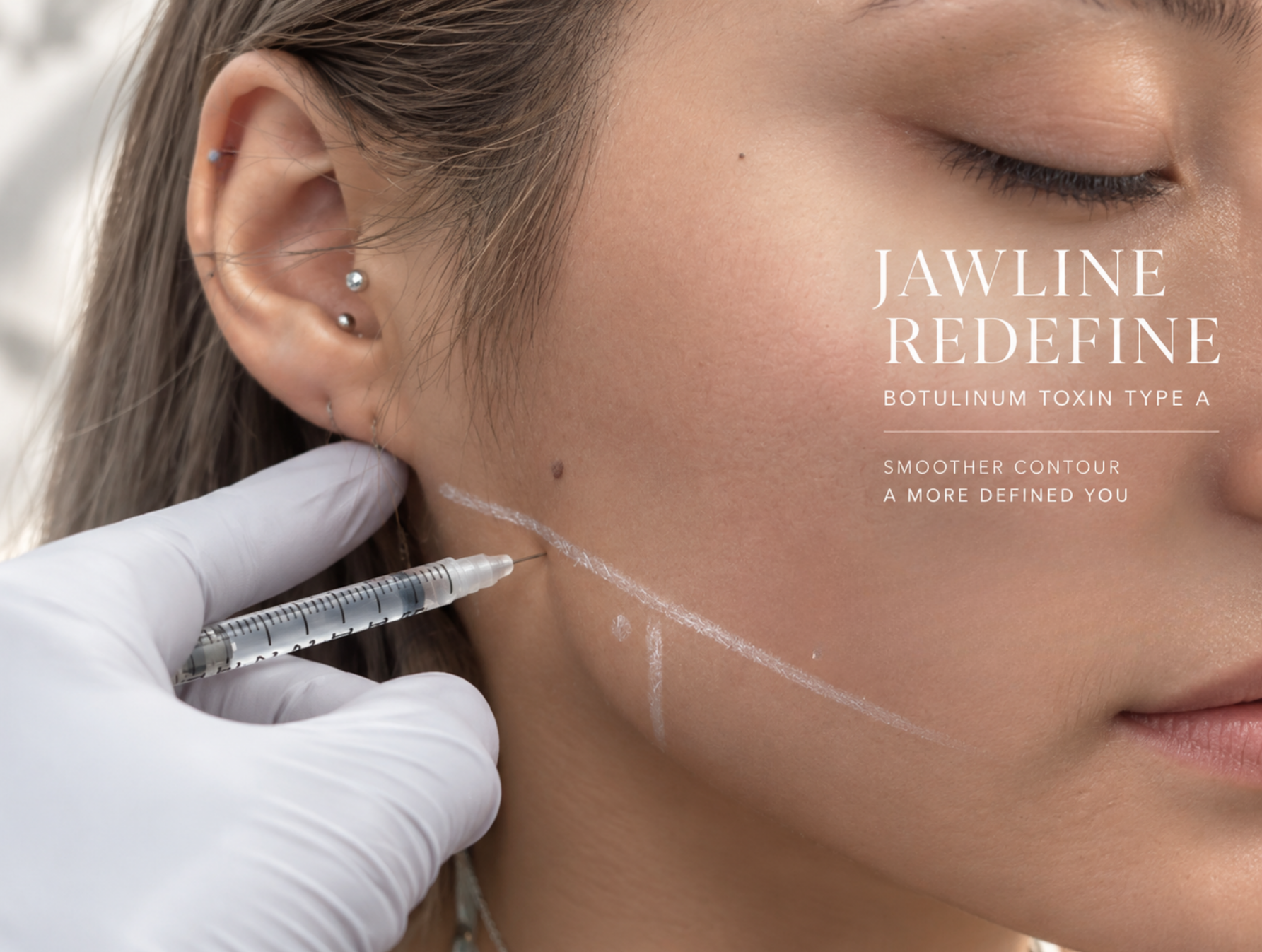
Botulinum Toxin Type A: More Than Just Wrinkle Reduction?
PART 2 | Contour Refinement
In the last issue, we introduced one of the most well-known aesthetic applications of botulinum toxin type A — improving dynamic wrinkles.
In this issue, we will further explore the use of botulinum toxin type A in facial contour refinement.
If you feel that your lower face looks wide, that both sides of your jaw appear prominent, or that your overall facial outline looks rather square, the cause may not necessarily be related to fat.
One possible factor is:
Well-developed masseter muscles.
For suitable candidates, botulinum toxin type A can temporarily reduce masseter muscle activity, gradually decreasing muscle volume — helping to soften the lower facial contour.

AESTHETIC | 02 Contour Refinement
What Are the Masseter Muscles?
The masseter muscles are located on both sides of the face, near the angle of the jaw, and are among the key muscles involved in chewing and biting.
When the masseters are bulky, both sides of the jaw may appear more prominent, making the lower face look wider — even presenting a noticeably square contour.
A wide facial contour therefore does not necessarily mean excess fat.
Muscle volume can likewise be an important factor influencing the lower facial contour.
How Does Botulinum Toxin Type A Help Refine the Masseter Contour?
The English term is “botulinum toxin type A".
Once botulinum toxin type A is injected into the appropriate target muscles, it can temporarily reduce the signals transmitted from nerves to the muscles, thereby decreasing muscle contraction.
As masseter activity gradually decreases, muscle volume may also progressively reduce over time, leaving the jawline looking softer.
However, it is important to note:
Botulinum toxin type A is not a fat-dissolving treatment, nor does it change bone structure.
If a wide facial contour is mainly related to bone structure, fat distribution, or other soft-tissue factors, botulinum toxin type A masseter treatment may not be the most suitable option.
That is why, before treatment, it is important to understand the main factors shaping your facial contour.

How Can You Tell If Your Masseters Are Well Developed?
The following facial features may be associated with more noticeable masseter volume:
01 | Masseters visibly bulge when you clench
Gently clench your teeth and feel both sides of your jaw.
If you can clearly feel a thick, firm muscle bulging when you clench, that is likely your masseter.
02 | A squarish lower facial contour
Some people do not have a particularly wide bone structure, but because of bulky masseters, both sides of the jaw appear more prominent visually, creating a squarish lower facial contour.
03 | Noticeable muscle volume on both sides of the jaw
Some people have relatively little overall facial fat, yet both sides of the jaw still appear prominent.
If the main cause is related to masseter volume, addressing fat alone may not achieve the desired contour-refinement result.
Does Botulinum Toxin Type A Masseter Treatment Mean “Face Slimming”?
Not necessarily.
Botulinum toxin type A masseter treatment primarily targets muscle activity and muscle volume.
If a wide facial contour is mainly related to well-developed masseters, reducing masseter activity may help gradually soften the lower facial contour.
However, facial contour is shaped by multiple factors together, including:
. Bone structure
. Fat distribution
. Muscle volume
. Skin and soft tissue
. Overall facial proportions
Therefore, not everyone with a wide facial contour is suitable for botulinum toxin type A masseter treatment.
The focus of a professional assessment is not simply deciding whether you need “face slimming,” but understanding the main factors behind your facial contour characteristics.
Natural Proportions Matter More Than Simply Pursuing a “V-shaped Face”
The goal of facial contour refinement is not to sculpt everyone’s face into the same shape.
Masseter contour refinement does not mean the narrower the face, the better.
An ideal treatment plan should be based on a comprehensive assessment of your individual:
Facial proportions + masseter volume + muscle activity + overall contour
The direction of treatment should focus on maintaining natural and harmonious facial proportions — leaving the lower facial contour looking softer, rather than simply pursuing an extremely tapered face shape.

Is Botulinum Toxin Type A Contour Refinement Right for You?
If you feel your lower face looks wide, both sides of your jaw appear prominent, or you wish to improve a noticeably square contour, you can start with a professional facial assessment.
A medical professional will assess your:
. Facial structure
. Masseter volume
. Level of muscle activity
. Facial proportions
. Personal aesthetic goals
This comprehensive assessment helps determine whether the masseters are the main factor influencing your facial contour, and whether botulinum toxin type A is suitable for your situation.
Everyone’s facial structure and proportions are different, so treatment plans should be individualized.
Botulinum Toxin Type A: More Than Just Wrinkle Reduction
From improving dynamic wrinkles to refining the masseter contour, botulinum toxin type A can be applied in different aesthetic treatments.
This issue is part of the 7 applications of botulinum toxin type A series:
② Contour Refinement | AESTHETIC
Last issue: Improving Dynamic Wrinkles | AESTHETIC
In the next issue, we will continue with another aesthetic application related to facial muscles: PART 3 | Other Facial Muscle Refinement
Besides the forehead, frown lines, crow’s feet, and masseters, how else can botulinum toxin type A target different facial muscle activity to help address specific aesthetic concerns?
Want to Know If Botulinum Toxin Type A Is Right for You?
Everyone’s facial structure, level of muscle activity, and aesthetic goals are different.
A professional assessment can help identify the main factors influencing your facial contour, and then determine — based on your individual situation — whether botulinum toxin type A is suitable and develop a personalized treatment plan. Contact a professional consultation today to learn more about Botulinum Toxin Type A and whether it is suitable for your skin.
More articles like this
Articles related to your interests, offering more insights and the latest information on medical aesthetics, wellness, and skincare.
Never miss a wellness tip!
Get new articles, clinic updates, and healthy living tips straight to your inbox.